
Oct 5, 2025
6
min read
Medically Reviewed
Share






The Channels of the Digital Front Door
A comprehensive digital front door serves patients through four primary channels. The telephone channel, which remains the most used access method for most Australian practices, is handled by CALLA, the AI receptionist that answers calls, understands patient intent, and completes routine actions such as booking appointments and answering frequently asked questions without human involvement. The web channel provides online booking and patient intake through the practice’s website, with the same AI ensuring that bookings are appropriate and intake information is captured accurately at the time of booking.
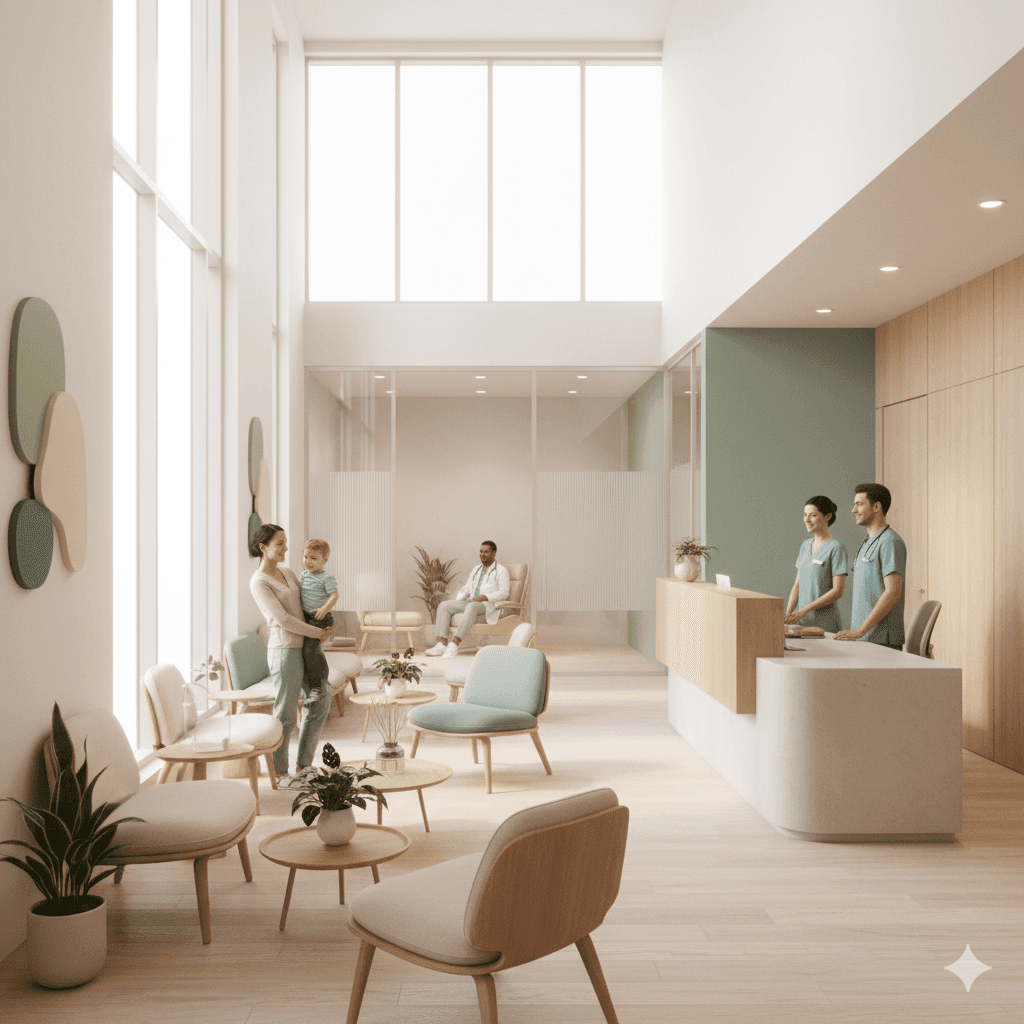
The messaging channel allows patients to communicate with the practice through SMS, email, or patient portal, with AI-powered triage ensuring that messages are routed to the appropriate person or handled automatically when they relate to routine matters such as appointment changes or prescription requests. The in-person channel, the physical front desk, is supported by the digital systems working in the background, with intake information already captured and available, so the patient’s arrival is seamless and efficient rather than requiring another round of data entry and form completion.
The unifying principle is that the patient should be able to move between these channels without losing information or repeating themselves at each touchpoint. A patient who books online through the website, calls to modify the booking, and then arrives at the practice should not need to provide the same details three times to different staff members. Each channel captures information that flows into the shared practice record, and the patient experiences a coordinated practice that remembers who they are and what they need at every interaction. This consistency across channels is what distinguishes a truly integrated digital front door from a collection of disconnected access points that merely give the appearance of digital capability. Practices that achieve genuine channel integration also report measurable reductions in duplicate record creation and data correction overhead, because intake information is captured accurately at the first point of contact and does not require retrospective reconciliation by administrative staff.
After-Hours Access: The Most Valued Capability
Patient surveys consistently identify after-hours access as one of the most valued capabilities a practice can offer, but it is also one of the most difficult to deliver through traditional staffing models. Extending reception hours into evenings and weekends requires additional staff, and the volume of after-hours calls rarely justifies the cost. The result is that most practices offer voicemail after hours, which patients consistently report as frustrating and inadequate.
An AI receptionist solves this problem by providing after-hours access without requiring staff to be present in the practice after hours. CALLA answers calls at any time of day or night, books appointments, answers questions, and captures intake information, all without human involvement. The patient who calls at 8pm with a non-urgent booking request is served immediately, and the practice captures a booking that would otherwise have been lost to a voicemail that may or may not be returned.
The value of after-hours access extends well beyond patient convenience and satisfaction surveys. Every appointment booked after hours is a slot filled that might otherwise have gone empty or been filled by a patient who would have called a competing practice instead of waiting. The practice’s capacity utilisation improves across the full schedule, and the revenue from those after-hours bookings contributes directly to the bottom line without any additional staffing cost. After-hours access becomes a competitive advantage that does not require additional staff cost, giving smaller practices the same round-the-clock availability that larger corporate clinics have traditionally been able to offer. The ability to compete on access without competing on headcount is a structural advantage that fundamentally changes the economics of independent practice ownership and challenges the assumption that only corporate-scale operations can deliver consistently responsive patient service.
Expert Tips
"The term digital front door sounds like a technology project, but it is really a patient experience project. The patients who call your practice at 7pm on a Tuesday are not looking for a chatbot; they are looking for a way to get their healthcare needs met without waiting until morning. The technology is how you deliver that, but the objective is the same one the front desk has always served: being the welcoming, helpful first point of contact. The most successful digital front doors are the ones that feel least digital to the patient." — Arash Zohuri, CEO, MediQo
Connecting the Front Door to the Clinical Workflow
A digital front door that operates in isolation from the clinical workflow is better than no front door at all, but it delivers only a fraction of its potential value. The real transformation occurs when the front door is connected to the clinical and administrative systems that follow. The intake information captured during the booking process should be available to the clinician before the consultation begins. The reason for the visit should populate the clinical note automatically. The patient’s preferences for communication should be respected across all channels.
MediQo’s platform achieves this integration by design across all its modules. When CALLA captures intake information during a phone call, that information flows into the practice’s patient record and is available to the Clinical Assistant when the clinician prepares for the consultation. When a patient books online, the booking system interacts with the same patient data and appointment schedule that CALLA uses. The front door is not a separate system; it is the entry point to the same connected platform that handles clinical documentation, billing, and analytics seamlessly.
The practical effect of this integration is that the patient’s journey from first contact through to consultation completion and billing is a single continuous process rather than a series of disconnected steps that require repeated data entry. Information is captured once and used many times across every stage of the patient journey. Staff do not need to re-enter data that was already collected at an earlier touchpoint. The clinician begins the consultation with context rather than from a blank state. The practice operates as a connected whole rather than as a collection of separate functions.
Key Takeaways
A digital front door allows patients to access the practice through their preferred channel, whether phone, website, or messaging, with consistent service quality.
The best digital front doors connect every access channel to the same underlying systems, so information captured in one channel is available across all others.
After-hours access is the most valued digital front-door capability from a patient perspective and the most under-delivered by traditional practices.
An integrated digital front door reduces front-office workload by handling routine interactions across all channels, not just telephone.
The concept of a digital front door in healthcare describes the collection of digital channels through which patients first interact with a practice: the telephone system, the website, online booking, patient portal, messaging, and increasingly, AI-powered conversational interfaces that understand natural language. A well-designed digital front door provides a consistent, accessible, and efficient entry point to the practice regardless of which channel the patient chooses to use, and it connects that entry point seamlessly to the clinical and administrative workflows that follow the initial contact.
Most Australian practices have some elements of a digital front door already in place. Many offer online booking through their website. Most have a telephone system. Some provide a patient portal for accessing results and communicating with the practice. But in most cases these channels operate independently, with information captured in one channel unavailable in another. The patient who books online must repeat their details when they call. The patient who sends a message through the portal does not find their query reflected in the clinical system.
This article explains what a genuinely integrated digital front door looks like, why it matters for patient access and practice efficiency, and how MediQo's platform enables practices to build a front door that is both digitally sophisticated and warmly human. For practices looking to meet rising patient expectations, the digital front door is where the transformation begins.
Share