Oct 5, 2025
6
min read
Medically Reviewed
Share




The Difference Between "Paper-Lite" and True Automation
To understand the path to a paperless reality, one must first distinguish between a "paper-lite" environment and a fully automated platform. A paper-lite clinic still relies on manual data entry. A patient fills out a paper form, and a receptionist types it in. A specialist sends a fax, and a practice manager scans it. In these scenarios, the medium has changed, but the labour remains manual and error-prone. This approach often leads to "digital clutter," where unsearchable PDFs accumulate in the server, providing little value to clinical decision-making.
True automation, delivered via a unified platform, removes the need for the manual bridge entirely. It relies on a consistent data model where information flows automatically from one module to another. When a patient speaks to an AI telephony agent, the data is structured and inserted directly into the intake fields. When a doctor consults via video, the notes are generated by ambient intelligence and synced to the record. There is no printing, no scanning, and no typing from a handwritten scrap. This is the "platform advantage": a seamless digital ecosystem where data is always live, always structured, and always accessible.
Step 1: Eliminate the Front Desk Clipboard
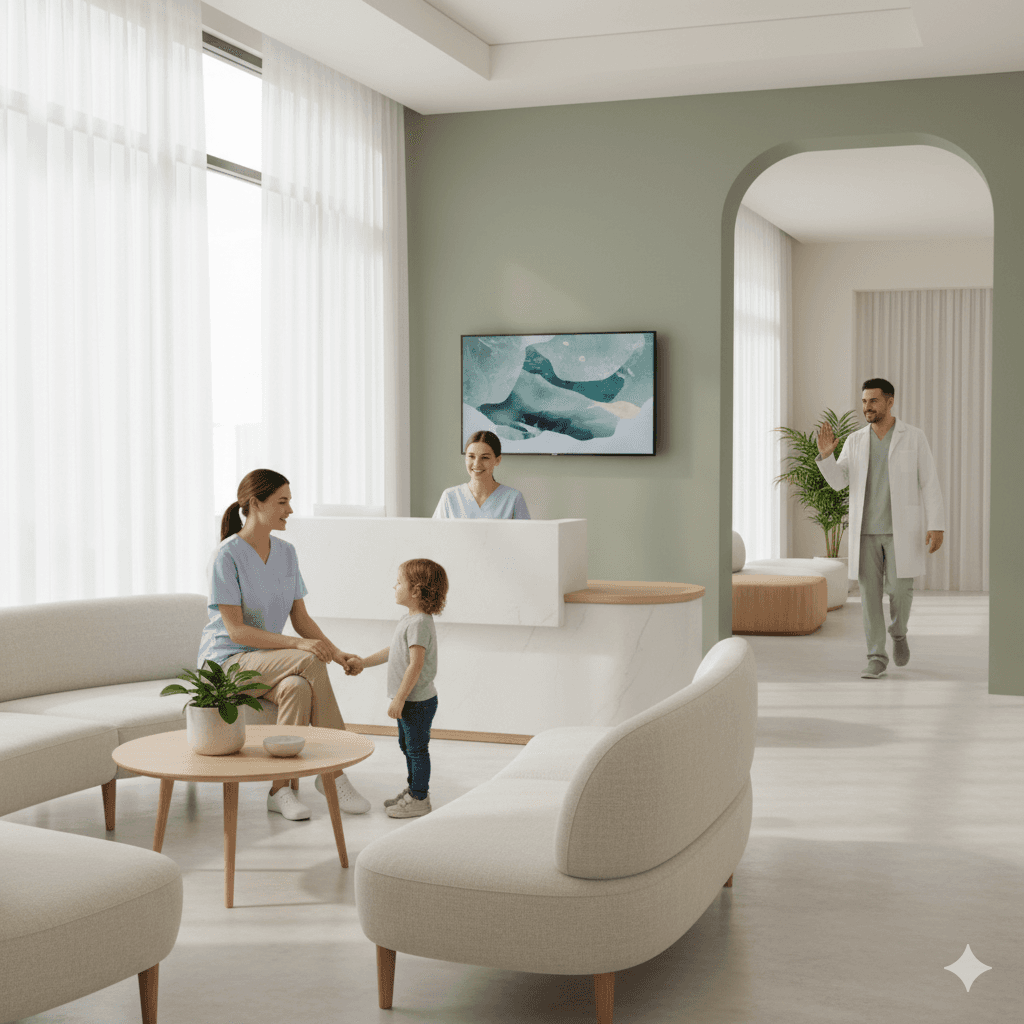
The most visible symbol of the paper-based clinic is the clipboard handed to patients upon arrival. Despite the prevalence of online booking engines, many practices still require patients to manually update their demographics, consent forms, and history on paper. This not only creates a poor patient experience but also guarantees that reception staff will spend hours engaging in data entry—a process that often results in transcription errors.
The solution lies in deploying intelligent automation at the "front door" of the practice. MediQo’s CALLA module revolutionises this intake process. CALLA is an AI telephony system that operates 24/7, handling calls and recognising conversational intent. Crucially, it captures structured pre-visit intake data. Whether the patient is calling to book an appointment or to update their details, CALLA collects this information digitally and integrates it directly into the Practice Management System (PMS). By the time the patient walks through the door, their file is already updated. The clipboard is rendered obsolete because the data has been captured at the source—the patient’s voice—and structured by the AI. This shifts the reception team’s focus from data entry to patient greeting, setting a professional, modern tone for the visit.
Expert Tips
"Going paperless isn't about buying a faster scanner; it's about stopping the creation of paper in the first place. Every piece of paper in a clinic represents a broken workflow—a point where two systems failed to talk to each other. When you adopt a unified platform, you bridge those gaps. You move from a clinic that runs on paper to a clinic that runs on data. The result isn't just a cleaner desk; it's a safer, faster, and more profitable practice." — Arash Zohuri, CEO, MediQo
Step 2: Replace the Notepad with Ambient Intelligence
Inside the consultation room, paper often persists in the form of the doctor’s notepad. Many General Practitioners find that typing on a keyboard disrupts their rapport with the patient. Consequently, they scribble shorthand notes during the consult and type them up later—often after hours. This reliance on paper notes creates a "double handling" of data and increases the risk that critical details will be lost in translation or forgotten by the end of the day.
A unified platform eradicates the need for this manual transcription through the use of a Clinical Assistant. MediQo’s Clinical Assistant utilises real-time ambient documentation to listen to the consultation and generate comprehensive SOAP-style notes. This technology allows the doctor to maintain eye contact and engage fully with the patient, confident that the AI is capturing the clinical narrative. Because the system is unified, it does more than just transcribe; it leverages the ambient data to automate the creation of care and treatment plans based on clinic-approved templates. For Australian clinics, where Chronic Disease Management (CDM) paperwork is a significant burden, this capability is transformative. The system generates the documentation in real-time, meaning the GP does not need a notepad to remember the details for later. The note is finished when the consult is finished.
Key Takeaways
Digitise all patient-facing forms.
Use secure cloud document storage compliant with APPs.
Adopt e-prescriptions and electronic referrals.
Train staff to maintain a fully digital workflow.
For over two decades, the "paperless office" has been the holy grail of Australian general practice. Since the early incentives for computerisation in the late 1990s, clinics have invested heavily in hardware, servers, and electronic health records (EHRs). Yet, walk into almost any medical centre in Sydney, Melbourne, or Brisbane today, and you will still see paper. You will see sticky notes on monitors, fax machines humming in the corner, patient intake forms on clipboards, and doctors scribbling on notepads during telehealth calls. While the storage of records has largely moved to the digital realm, the workflows remain stubbornly tethered to analogue habits.
The persistence of paper is not due to a lack of technology, but rather the way technology has been implemented. Most clinics have adopted a "digitised" approach rather than a "digital" one. They scan paper documents into PDFs, effectively creating digital paper, rather than utilising structured data. Furthermore, they have adopted disjointed point solutions—one app for bookings, another for video calls, and another for messaging—that do not talk to each other. This fragmentation forces staff to use paper as the bridge between systems. To achieve a truly paperless practice, Australian clinic owners must look beyond simple digitisation and embrace the strategic advantage of a unified clinical automation platform. By consolidating operations under one digital roof, as exemplified by MediQo, practices can finally eliminate the friction that keeps the printers running.
Share