Oct 5, 2025
6
min read
Medically Reviewed
Share






The Front Desk: Crisis Management vs. Concierge Service
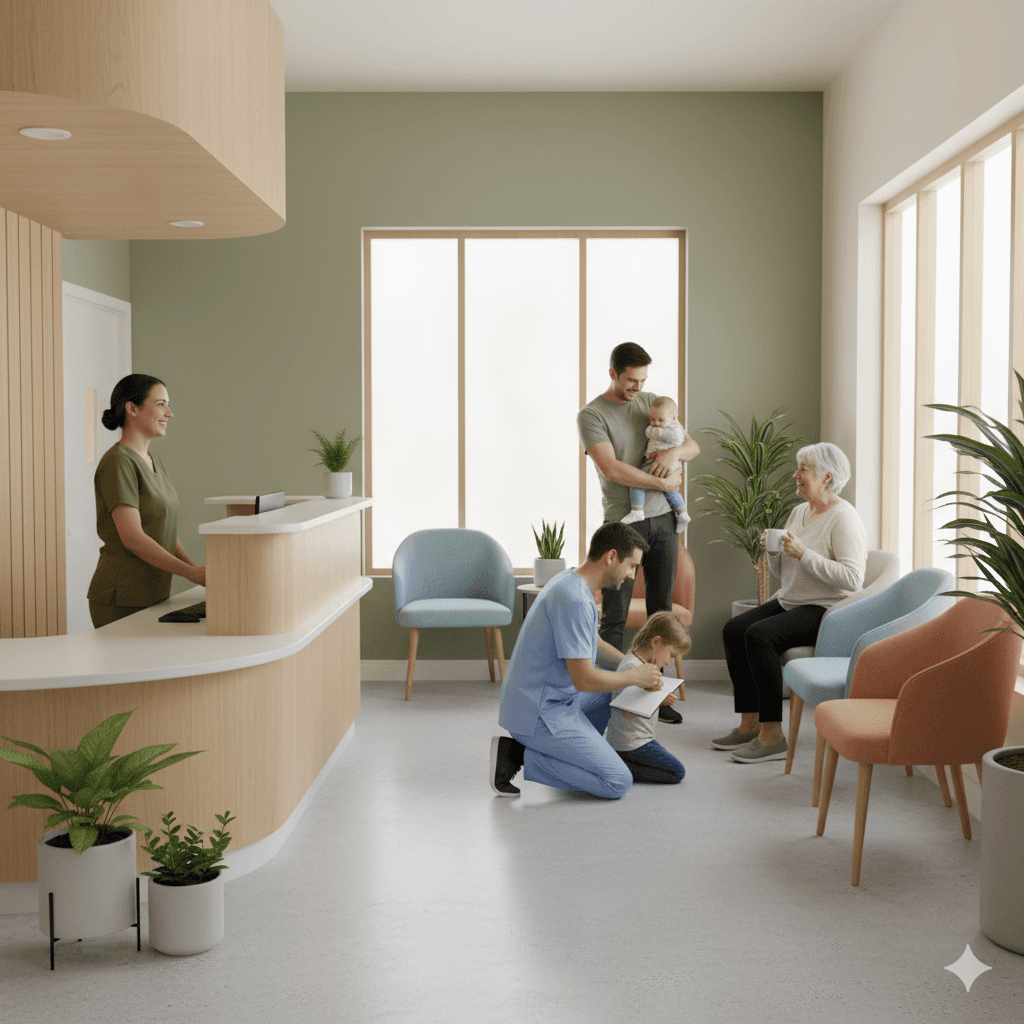
The most visible difference between the two models manifests the moment a patient attempts to contact the clinic. In a busy bulk-billing centre, the phone lines are often saturated. The reception team acts as air traffic control, managing a ceaseless stream of appointment requests, walk-ins, and quick queries. The workflow here is reactive. Staff are frequently overwhelmed, leading to long hold times and a chaotic waiting room experience. The cost of this chaos is high; every missed call is a missed consultation, and in a volume-based model, utilisation rates must remain near 100% to ensure profitability.
In contrast, a private practice views the front desk as a concierge service. The volume of calls may be lower, but the duration and complexity of each interaction are higher. Patients expect their calls to be answered promptly and their queries handled with patience. The workflow here is proactive, focusing on relationship management. However, even in private practice, administrative friction can degrade this experience. If a receptionist is tied up manually entering intake data, they cannot offer a warm welcome to the patient standing in front of them.
A unified platform addresses both scenarios through intelligent automation, though the strategic benefit differs. For the bulk-billing clinic, MediQo’s CALLA module is a volume valve. As an AI telephony system operating 24/7, it handles the flood of routine calls, booking appointments directly into the Practice Management System (PMS) and capturing structured pre-visit intake data. It ensures that no revenue opportunity is lost to a busy signal. For the private practice, CALLA acts as a digital assistant that liberates the human staff. By automating the routine booking and intake tasks, CALLA frees the reception team to focus on the high-touch, face-to-face interactions that justify the private fee. In both cases, the technology eliminates the bottleneck, allowing the specific workflow—whether speed or service—to flourish.
The Consultation: Racing the Clock vs. Deep Engagement
The pressures inside the consultation room represent the sharpest contrast between the two models. For the bulk-billing General Practitioner (GP), time is the most scarce resource. To maintain a viable income on the Medicare rebate alone, the doctor must maintain a brisk pace, often seeing four to six patients per hour. The workflow is intense: open file, rapid history taking, examination, diagnosis, print script, close file. Any friction in this cycle—such as slow software, searching for pathology results, or typing detailed notes—is a direct hit to the doctor’s earning capacity and stress levels.
In a private practice, the consultation is typically longer, often fifteen to thirty minutes. The pressure here is not just speed, but depth and connection. The patient, having paid a premium, expects the doctor to listen intently, explain thoroughly, and provide a comprehensive management plan. If the doctor spends half of this expensive consultation staring at a screen and typing, the patient’s perception of value diminishes. The workflow challenge here is maintaining rapport while satisfying the rigorous documentation requirements of complex care.
MediQo’s Clinical Assistant provides the solution for both, adapting to the pace of the room. For the bulk-billing GP, the Clinical Assistant’s real-time ambient documentation is a speed multiplier. It listens to the consult and generates structured SOAP-style notes instantly. It automates the creation of care plans and referrals, removing the manual typing that slows down the transition between patients. For the private GP, the technology serves as a tool for engagement. Because the AI captures the clinical narrative securely in the background, the doctor can maintain eye contact and focus entirely on the patient. The unified platform’s History-at-a-Glance feature is equally vital: for the busy doctor, it provides instant context to speed up decision-making; for the private doctor, it ensures they recall every detail of the patient's history, reinforcing the personal relationship.
Expert Tips
"There is a misconception that automation is only for high-volume 'churn' clinics. In reality, the most exclusive private practices often have the greatest need for our platform. Why? Because in a private setting, your time is your product. If you are charging a premium fee, you cannot afford to spend ten minutes of the consult typing with your back to the patient. Automation buys you the freedom to be present. Whether you see six patients an hour or two, the goal is the same: to remove the administration so the medicine can shine." — Arash Zohuri, CEO, MediQo
Documentation: Compliance Survival vs. Comprehensive Detail
Documentation requirements weigh heavily on all Australian doctors, but the nature of the burden differs. In high-volume bulk-billing clinics, the risk is often "compliance survival." When moving at speed, there is a temptation to write brief, cursory notes. However, this leaves the doctor vulnerable to Medicare audits, particularly if they are billing for chronic disease management items that require specific evidence. The workflow is often a constant catch-up game, with doctors staying back late—"pajama time"—to flesh out the skeletal notes made during the day.
Private practices face a different documentation challenge. The expectation for correspondence is significantly higher. Referral letters to specialists need to be detailed and professional, reflecting the quality of the practice. Care plans must be bespoke and comprehensive. The workflow here involves significant time spent crafting letters and reviewing history to ensure accuracy.
A unified platform offers a strategic advantage by standardising quality regardless of time constraints. MediQo’s Clinical Assistant ensures that even a six-minute consult results in a robust, legally defensible note. It captures the necessary clinical indicators to support the billing, protecting the bulk-billing doctor from audit risk without slowing them down. Simultaneously, the system leverages its understanding of the consultation to draft smart referrals with complete clinical detail. This allows the private practitioner to produce specialist-grade correspondence in seconds rather than minutes. By automating the structure and content of documentation based on clinic-approved templates, the platform ensures that speed does not compromise safety, and detail does not compromise efficiency.
Key Takeaways
Bulk-billing requires higher patient throughput.
Private practices focus on personalised patient experiences.
Revenue capture differs across billing methods.
Admin workflows must adapt to different funding models.
The Australian general practice landscape is currently undergoing a structural transformation. For decades, the distinction between a purely bulk-billing clinic and a private or mixed-billing practice was stark, defined largely by their financial models. However, as the Medicare rebate freeze thaws slowly and operational costs skyrocket, the operational divergence between these two models has widened. While both aim to deliver excellent clinical care, the engine room—the workflow—operates on entirely different mechanics. Understanding these differences is not just an academic exercise; it is essential for clinic owners and managers who are trying to select the right technology stack to support their specific business strategy.
In a bulk-billing environment, the operational imperative is throughput and efficiency. The margin per patient is lower, meaning viability relies on volume. Conversely, in a private practice, the imperative is value and service. The patient is paying a gap fee, often substantial, and in return, they expect a higher level of engagement, punctuality, and administrative polish. Despite these diverging goals, both models currently suffer from the same technological affliction: fragmentation. This article explores the nuanced workflow differences between high-volume and high-service models and argues that a unified clinical automation platform, such as MediQo, provides the strategic advantage necessary to succeed in either environment.
Share